Thursday, April 2, 2020

different types of lizards

Types of Lizards


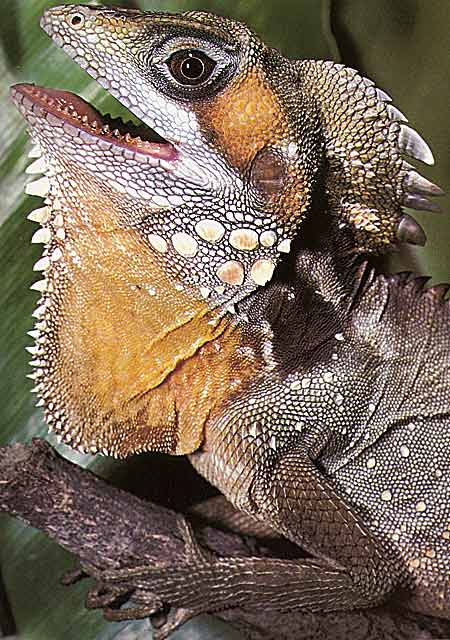
rainforest dragon
Boyd's Rainforest Dragon

Lizards are reptiles, or members of the class Reptilia, and are descendants of the dinosaurs that once ruled the Earth. They inhabit all of the continents apart from Antarctica, from sea level to heights of 16,500 feet (5000m). Lizards live in diverse environments and are the most geographically widespread of the reptiles. That makes them the largest group of reptiles with about 5000 species. They have walked the earth for some 200 million years.
Reptiles have the following physical features: they have vertebrate, lungs, and scales or plates. They are cold-blooded, getting all of their heating from the environment (the sun) which can be deadly during cold spells. What could be good about that? Well, this allows the reptiles to eat much less than a mammal of the same weight might. In the desert, for example, this might be useful in terms of competing for food. Also, since they don't need so much energy from food to heat themselves they can spend more time basking and taking in the sights. However, poor temperature control means they need to be active when the temperature is suitable and for this reason most are active during the day.
The classification or taxonomy of lizards can be subject to interpretation and change but here are the major groups and families:
  • Diploglossa: knob-scaled or xenosaurs; glass and American legless lizards
  • Gekkota: geckos, blind and legless lizards
  • Iguania: iguanas, agamas, anoles, chameleons; casquehead, collared, leopard, earless, spiny, tree, wood, side-blotched, neotropical ground and horned lizards
  • Platynota: gila monsters, earless monitors and monitors
  • Scincomorpha: skinks, tegus; spinytail, plated, spectacled, wall, and night lizards
Most lizards are four-legged, but some have only two legs and even a few are leg-less. Their size ranges from 2 in to 10 ft in length. There are 2 species that are venomous, the gila monster and the Mexican beaded lizard.
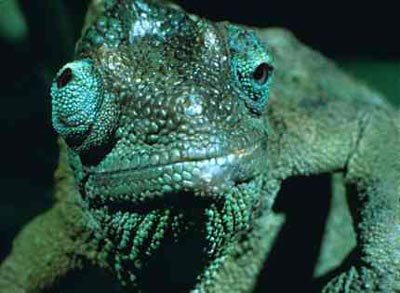

chameleon eyes
Chameleon
Some lizards change colors very quickly to match their environment, like the chameleon. Their colors are also affected by the sun. Often, when basking in the sun, the colors of a lizard's skin can become bright and vibrant like the collared Lizard. A cold lizard may be dark and colorless.
Distinct colors, aside from simply being interesting, like having a blue tongue, a bright red dewlap, or yellow spots, may help lizards identify each other and even communicate. Lizards have very keen eyesight and they also use body language posturing and gestures such as head-bobbing to communicate with each other.
See more about Chameleons

collared
Collared Lizard
You may notice that the collared lizard pictured above is shedding a layer of old skin. The skin or scales of a lizard is made up of keratin. This substance is also what human fingernails are made of.
Collared lizards are known to be aggressive and they eat other species of lizards.
The Tale of the Amazing Regenerating Tail
Encountering a dangerous predator, some lizards can voluntarily shed their tails into one or more pieces. Prior to losing the tail, some, such as the Texas banded gecko, slowly wave the vertical tail in the air from one side to another. This tactic is employed to cause the snake or other predator to focus on the tail instead of the more vulnerable head or body. The shed tail itself shakes convulsively for several minutes, further distracting the predator and improving the lizard's odds of escaping unharmed with one less body part. Species capable of this feat have a "fragile" tail, with fracture planes in one or more of the vertebrae. A wall of connective tissue or cartilage passes through each such vertebra, making a weak point, where muscles and blood connections are also modified to allow an easy break.
After shedding a tail the a new one slowly grows back, but never quite the same as the original. It may not have all the vertebrae with fracture planes, but it has all the functions of the original which assist in running, swimming, balancing or climbing, camouflage, courtship, mating and fat-storage. If the tail breaks at any other place than a fracture plane, regeneration is slight. Losing a tail, though it may save the clever creature's life, is not without costs. For example, the fat stored in the tail is normally broken down and used for growth and maintenance when food is scarce or no longer available, especially in winter or drought. Some species, like the Australian marbled gecko, is known to live longer when it has a tail. In addition, the fat stored in a female's tail appears to be important in yolk production; individuals lacking tails produce eggs with lower mass and less energy, and the offspring survive less well. Tail regeneration itself may require substantial energy, an expenditure that could be used instead for reproduction, perhaps making larger eggs. In the Texas banded gecko, at least, reproduction is known to have energetic priority over tail regeneration. This may be true for other short-lived species of lizards, especially when the probability of producing offspring is low. At least some species in most of the families of lizards are capable of tail-loss except for all species of chameleons, beaded lizards, the Bornean earless lizard, monitors and xenosaurs.
Diet
Many lizards are fearsome predators themselves, feeding on insects, birds and even mammals and other members of the reptile family. The most impressive predator would be the Komodo dragon, that is a scavenger as well as a predator, and can overtake goats and even water buffalo. Its teeth are compressed with sharp edges, resembling those of sharks. The dragon literally rips chunks of flesh from its large prey. It also possesses a highly flexible skull that allows it to swallow big bites of flesh. The Caiman lizard eats snails. Its rigid skull and tough teeth provide it with the power for breaking shells. A small percent (about 2 percent) of known species of lizards are primarily vegetarian. Iguanas consume a wide variety of plant material, especially as adults. The marine iguana of the Galapagos Islands may win the vegetarian prize for their deep diving efforts to find plant material. Some skinks feed on plants and fruits. Other species change their diets as they grow and with the seasons to take advantage of the available food supply.
Territorial skirmishes are common among lizards and a number of body movements indicate territorial ownership or aggressive intent such as: color changes, body inflation, dewlap unfolding, push-ups, jaw-flapping, tail-waving and head-jerking. Sometimes such behavior can leave posturing lizards vulnerable to vigilant predators. Males are often looking to hold a nice territory for mating. Females are also territorial in some species.
Body language is also a big part of mating rituals. Head-bobbing, tail-waving, dewlap-moving, back-arching and dancing may be crucial for mating communication, whether it be accepting or rejecting mates. Other species can use chemical secretions or vocalizations to communicate mating information. There are species of lizards that have no males! The females produce eggs that need no fertilization. This, however, limits the genetic variety of the species.
Most lizard parents don't care much for their offspring. There are a few species that may watch over their eggs. Otherwise, mating and finding a good spot to lay eggs is considered a job well-done.

iguana
Common Iguana
Unfortunately for lizards, life on the earth populated with humans is not all about good times. Central Americans like to eat the iguanas and think they taste good, calling them "tree chicken". In Central America, the black iguanas are called garrobos, and the green iguanas are called iguanas, so you might find "sopa de garrobo" or "iguana soup" on some menus. Charbroiled tail of iguana can also be found. The common method of hunting is with a slingshot. Freshly killed prey is often held up for display alongside the highway by the hunters, in order to entice buyers. Another lizard, the uromastyx or spiny-tailed lizard, is commonly eaten in many countries from Northern Africa through the Middle East and in India.
Common Iguanas are not bad swimmers. When attacked, an iguana may jump from a tree or rock into the water to swim away.
Marine iguanas live only on the Galapagos Islands and it is thought that they arrived to the islands by floating from mainland South America on debris. They can dive as deep as 50 feet (15m) underwater to feed on algae. They can stay under water for up to 20 minutes. In order to stay down for very long in colder temperature water they have to first heat up their bodies in the sun, slow down their hearts in the water, then re-heat in the sun again once they get out.

basilisk
Basilisk - Source: Tad Arensmeier
Basilisks are great runners. When in danger, these lizards start running upright on their back legs. They can even run fast enough to walk, or run really, on water. This has caused them to be referred to as the "Jesus Christ Lizard".
See more about the Jesus Lizard
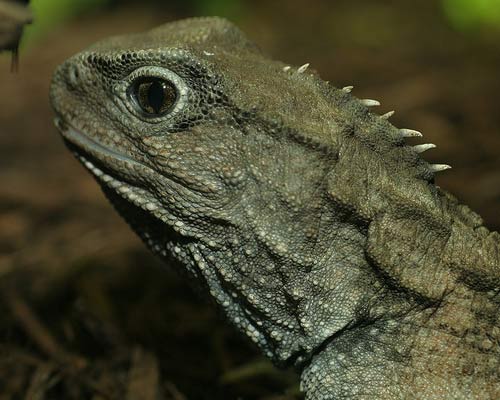
tatuara
Tuatara - Source: Tad Arensmeier
The tuatara has virtually remained the same for over 140 million years. The tuatara is a reptile, but not in the lizard family, it is part of the family Rhynchocephalia (which translates to Beakheads) which appeared over 220 million years ago. All the Beakheads, besides the tuatara - 2 species, became extinct about 60 million years ago. They are very rare, nocturnal animals.
chuckwalla
Chuckwalla - Source: Tad Arensmeier
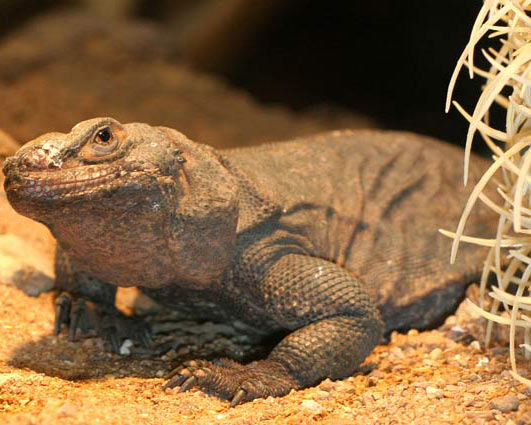
Chuckwallas are rock dwellers in the Southwest USA and Mexico. When threatened, they crawl into crevices and puff-up their bodies so that they are tightly wedged in and nothing can yank them out.
Lizards have crude third eyes on top of their heads that senses whether it's day or night.

horned lizard
The "horned devil lizard" shoots blood from its eyes to scare away predators.
Also see the similar thorny devil

flying lizard
A flying dragon lizard avoids danger by opening two large, winglike flaps of skin and gliding from tree to tree. The lizard steers and brakes with its tail. The large flaps are supported by elongated ribs which they can expand and retract. The wings are brightly colored and for this reason they are also called the "butterfly lizard".

bearded dragon
Bearded Dragon Lizard
The Bearded Dragon is one of the most common lizard pets, along with iguanas. They are generally docile.
gecko
Gecko
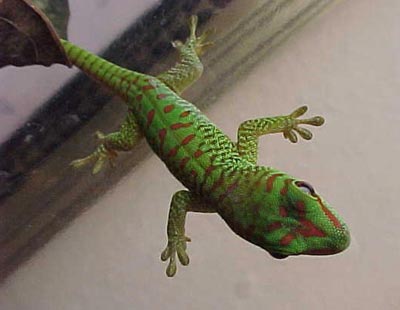
The Gecko is the only lizard and reptile that speaks or barks. Many species are well known for their specialized toe pads that enable them to climb smooth and vertical surfaces, and even cross indoor ceilings with ease. There are an estimated 2,000 different species of geckos worldwide, with many in existence still yet to be found. Just recently a 100-million-year old gecko species was discovered in the Eastern Himalayas.
One gecko with distinct coloring and bark! - Tokay Gecko

frilled
Frilled Lizard
This defensive posture of the frilled lizard is intended to increase its apparent size and intimidate adversaries. They open their frills around their necks and hiss when threatened.

casque-head lizard
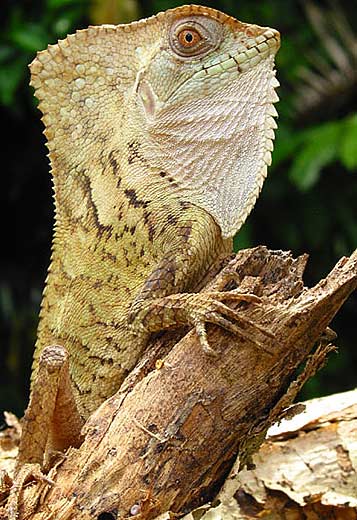
Old-Man Lizard aka Casque-Head Lizard aka Hernandez's Helmeted Basilisk (Corytophanes Hernadezi) - Belize - Source: Kristiina Hurme
old man
Old-Man Lizard aka Casque-Head Lizard aka Hernandez's Helmeted Basilisk (Corytophanes Hernadezi) - Belize - Source: Kristiina Hurme
yellow-spotted
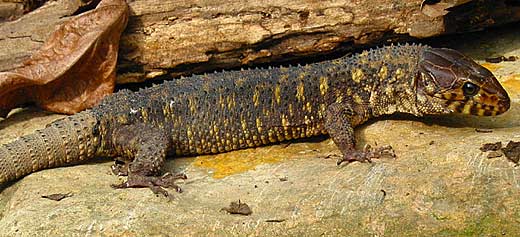
Yellow-spotted Night Lizard (Lepidopyma Flavimaculatum) - Belize - Source: Kristiina Hurme

blue-tongued
Blue Tongued Skink

agamid
Asian Agamid
Agamids are lizards of the Old World. There are more than 300 different species in Africa, Asia and Australia. Their counterpart in the Americas would be the Iguanidae. Some agamids enjoy the water and others prefer the trees.

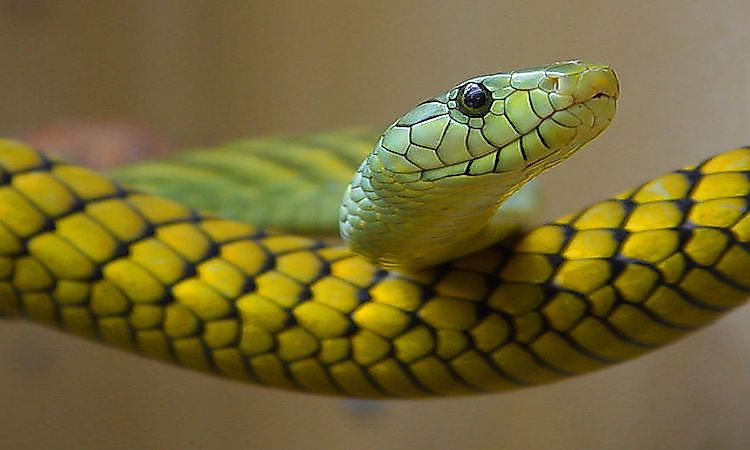
Different types of Venomous Mambas

Western green mamba 

#4 Western green mamba -
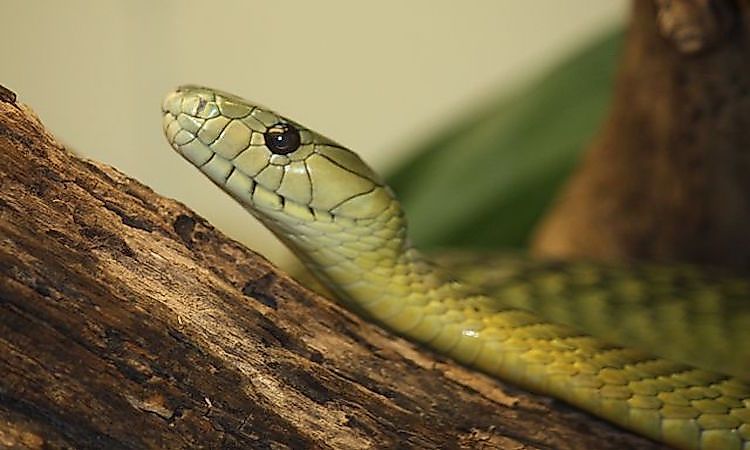
The western green mamba or the Hallowell’s green mamba (Dendroaspis viridis) is a highly venomous mamba species which is found in the thickets, woodlands, and coastal tropical rainforests of western Africa. The snake is a highly arboreal species that can swiftly move between trees in pursuit of prey. The snakes are long and slender-bodied and attain a length between 4.6 feet and 6.9 feet. The neurotoxins, cardiotoxins, and fasciculins present in the venom of the western green mamba can kill adult humans with a single bite if the victim is left untreated. Some claim that the snakes have a nervous and aggressive nature that leads to quick snake bites when threatened.

Black mamba

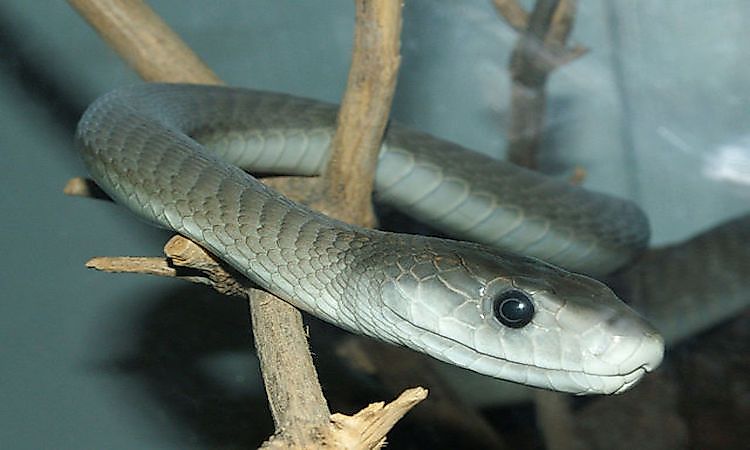
#3 Black mamba -  The black mamba (Dendroaspis polylepis) is a species of mamba that is found in sub-Saharan Africa. Though named as the black mamba, this species has a color that varies from gray to dark brown. The black mamba is Africa’s longest venomous snake, and mature individuals attain a length greater than 6.6 feet. The black mamba, unlike other mamba species, is not generally arboreal in nature but live on land in a range of terrains. The snakes prey on small mammals like bushbabies and hyrax and also birds. The snake is an expert ambush and pursuit predator. The black mamba is also regarded as the speediest of all snakes and can move at speeds of 11 km per hour over short distances. The inky black mouth of this snake gives it the name of black mamba, and it has a reputation of being highly aggressive. The highly poisonous venom of this snake can kill adult humans easily. However, since the black mamba's range has limited overlaps with human settlement, human snake bite reports are rare. Still, the black mamba is regarded as the most feared snake in the continent and the locals refer to its bite as the “kiss of death.”


Jameson's mamba

#2 Jameson's mamba -
The Jameson's mamba (Dendroaspis jamesoni) is a highly arboreal, quick, and extremely venomous snake that is endemic to Africa. The snake occurs primarily in Central and West Africa and some parts of East Africa. These snakes are found in a wide range of habitats within their range which includes rainforests, savanna, woodlands, and also deforested areas up to altitudes of 7,200 feet. The Jameson’s mamba attains an average length of 4.9 feet to 7.2 feet, have a dull green colored dorsal surface and cream or yellowish colored ventral surface. The snakes possess narrow and elongated heads with small eyes. Birds form the major part of the diet of these snakes. The venom of this snake is a potent cocktail of neurotoxins, cardiotoxins, hemotoxins, and myotoxins. Untreated bites might trigger death in human victims within 30 to 120 minutes.


Eastern green mamba

#1 Eastern green mamba -
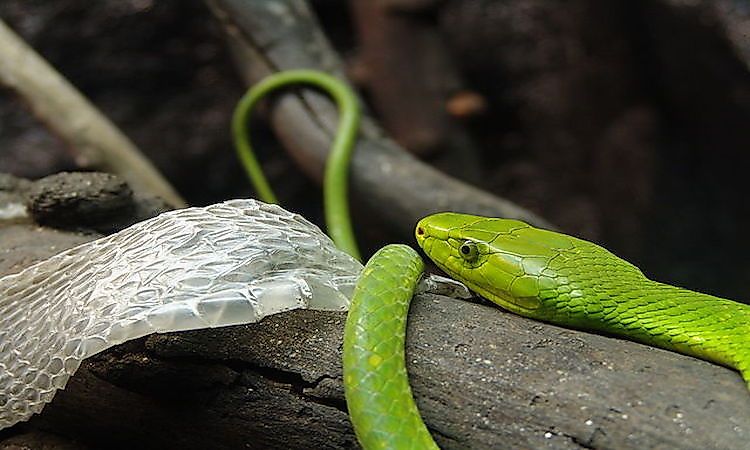
The eastern green mamba or the common mamba or the white-mouthed mamba (Dendroaspis angusticeps) is a highly venomous, tree-dwelling, large mamba snake which lives in southern East Africa’s coastal regions. Adult females are longer than males and have an average length of 6.6 feet. These snakes prey on bats, birds, rodents, and eggs. Unlike other mamba species, the eastern green mamba is shy and elusive in nature. The green color of these snakes easily camouflages them among the trees. The venom of the eastern green mamba is a potent neurotoxin which affects the nerves, muscles, and heart, and triggers quick death by respiratory paralysis. The snake bite in adult humans can kill within 30 minutes and has high mortality rates.

Black headed Python


Black-headed python body

The black-headed python can survive in a wide range of climates and conditions, with the exception of the driest and extremely arid environments. The species prefers habitats like savannas and dry scrublands, but they are also found in forests or agricultural farmland.

They are found at elevations up to 200 feet (60 m) above sea level. The black-headed pythons are nocturnal animals and have adapted themselves to surviving in the hot and dry conditions of their habitats. In colder temperatures, they will use termite nests to burrow, if available, as a way of stabilizing their body temperature.

Their characteristic shiny black head is also used regulate its body temperature, they can extend only their head outside its burrow while most of the body remains covered to heat up. On the other hand, if they need to cool down the black-headed python may bury their black head in the sand. 

Although they are capable swimmers, black-headed pythons are rarely found in the water. They can also climb and the black-headed python is occasionally found in trees. They will hiss loudly if disturbed or harassed and sometimes strike with a closed mouth. 

These pythons don't have heat sensing pits like other Australian python species such as the spotted python and the venomous pit vipers. These specialized organs are used for tracking endothermic prey like mammals or birds, detecting even the smallest temperature changes.

But since the black-headed python feeds most on cold-blooded reptiles it has no need for such a developed organ. Instead, they have an equivalent sensory organ in their rostral scales just like their close relative the Woma python (Aspidites ramsayi).

​They are preyed upon by several animals such as birds of prey, dingoes and the northern quoll (Dasyurus hallucatus). These snakes can live anywhere from 20 to 30 years, both in the wild and captivity.


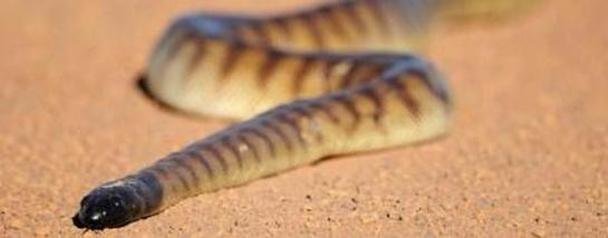
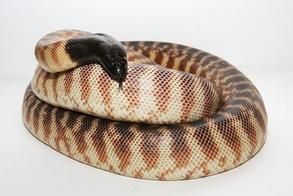
Black-headed pythonTheir distinctive black color is present in the head but also runs down the neck for about 20 scales, and in juvenile snakes, it can extend even further to ventral scales.

The color of the body varies from brownish, yellow to a reddish tan, normally with some irregular dark brown bands.

The black-headed python color varies extensively depending on geographic location and age.
The black-headed python average length ranges from 5 to 6,5 ft (1.5 to 2 m) females grow longer than males.

They have a cylindrical and slender body and adult specimens weigh 35 pounds (16 kg) on average.
The species is also known as black-headed rock python or simply rock python, but it's not to be confused with the African rock python.

Other common names include Terry tar pot or tar pot, because of their distinctive black head, giving it the appearance that it was dipped in tar or black ink. The Pilbara region Nyangumarta aboriginals use the name "Purruyura" for the species.


The Black-headed python (Aspidites melanocephalus) is a snake species from the python family (Pythonidae) and native to Australia.

These snakes can be found throughout the northern regions of Australia, including most of the Northern Territory and also the northern latitudes of Western Australia and Queensland.​
Black-headed python body
The black-headed python can survive in a wide range of climates and conditions, with the exception of the driest and extremely arid environments. The species prefers habitats like savannas and dry scrublands, but they are also found in forests or agricultural farmland.

They are found at elevations up to 200 feet (60 m) above sea level. The black-headed pythons are nocturnal animals and have adapted themselves to surviving in the hot and dry conditions of their habitats. In colder temperatures, they will use termite nests to burrow, if available, as a way of stabilizing their body temperature.

Their characteristic shiny black head is also used regulate its body temperature, they can extend only their head outside its burrow while most of the body remains covered to heat up. On the other hand, if they need to cool down the black-headed python may bury their black head in the sand.

Although they are capable swimmers, black-headed pythons are rarely found in the water. They can also climb and the black-headed python is occasionally found in trees. They will hiss loudly if disturbed or harassed and sometimes strike with a closed mouth.

These pythons don't have heat sensing pits like other Australian python species such as the spotted python and the venomous pit vipers. These specialized organs are used for tracking endothermic prey like mammals or birds, detecting even the smallest temperature changes.

But since the black-headed python feeds most on cold-blooded reptiles it has no need for such a developed organ. Instead, they have an equivalent sensory organ in their rostral scales just like their close relative the Woma python (Aspidites ramsayi).

​They are preyed upon by several animals such as birds of prey, dingoes and the northern quoll (Dasyurus hallucatus). These snakes can live anywhere from 20 to 30 years, both in the wild and captivity.

Black-headed python
Their distinctive black color is present in the head but also runs down the neck for about 20 scales, and in juvenile snakes, it can extend even further to ventral scales.

The color of the body varies from brownish, yellow to a reddish tan, normally with some irregular dark brown bands.

The black-headed python color varies extensively depending on geographic location and age.The black-headed python average length ranges from 5 to 6,5 ft (1.5 to 2 m) females grow longer than males.

They have a cylindrical and slender body and adult specimens weigh 35 pounds (16 kg) on average.The species is also known as black-headed rock python or simply rock python, but it's not to be confused with the African rock python.

Other common names include Terry tar pot or tar pot, because of their distinctive black head, giving it the appearance that it was dipped in tar or black ink. The Pilbara region Nyangumarta aboriginals use the name "Purruyura" for the species.

Subspecies / Taxonomy

The black-headed python was first described in 1864 by Johann Ludwig Krefft one of Australia's first zoologists and paleontologists. There are no subspecies are currently recognized by scientists for the black-headed python.
​
Diet / Feeding

The black-headed python feeds primarily on other reptiles, mostly skinks but also bearded dragons, geckos, legless lizards even the perentie (Varanus giganteus) which is Australia's largest monitor lizard.

Other smaller snakes, including some of the most venomous snakes in the world, are also eaten by the black-headed python since they are completely immune to their highly toxic venom. They will on rare occasions also eat mammals or even birds if the opportunity should arise.

Since the black-headed python is a non-venomous snake it uses constriction to subdue and kill the prey before consuming it whole.

Reproduction

The black-headed python is monogamous, but sometimes males and females may engage in extra-pair copulations. Male black-headed pythons will engage each other over the right to breed with a female. Like other python species, the black-headed python is oviparous.

Female snakes lay their eggs during October and November and incubate them by coiling around them for approximately 2 months before they hatch. Although the males aren't as aggressive as most python species mating and courtship it sometimes involves ritualistic combats or biting.

Some captive snakes have been bred as young as two and half years but in the wild, these snakes reach sexual maturity at the age of 4 to 5 years. The hatchlings are on average 2 ft (60 cm) in length at birth and capable of fending for themselves immediately.

Conservation / Threats

The black-headed python has not been evaluated by the IUCN and there is a lack of available information with regards to their population trends. But the species is considered widespread and abundant throughout their range. The species isn't listed in CITES.

One potential threat to these snakes like many others is the exotic pet trade, but since the majority of individuals found in the pet trade are captive bred, the risk is low. The sales of black-headed pythons as pets or for breeding purposes has become relatively common in northern Australia.
​

Sunday, March 1, 2020

This all about cobras

Equatorial Spitting Cobra (0.60 mg per kg)

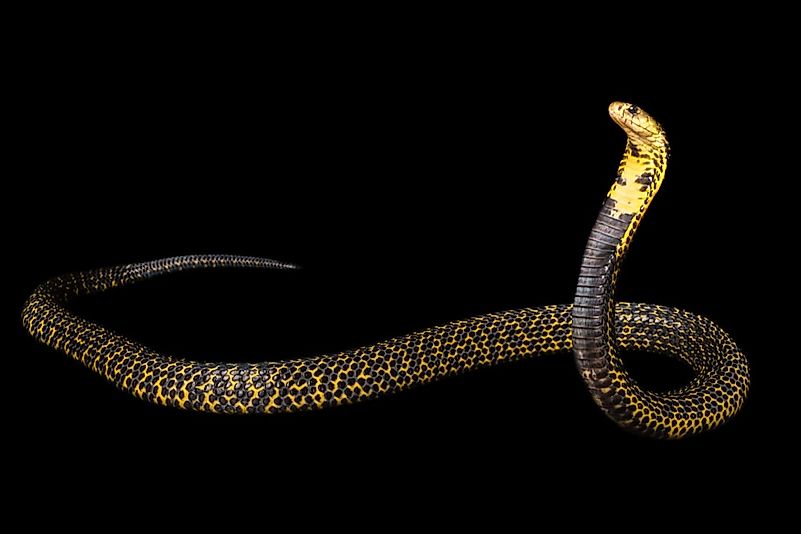
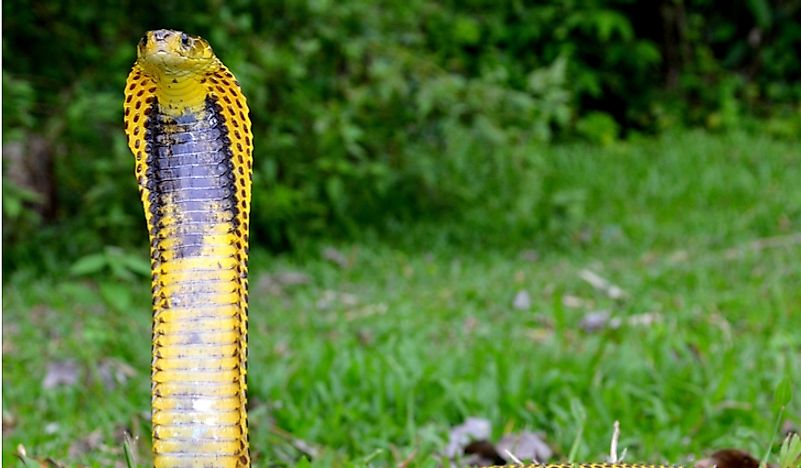
#10 Equatorial Spitting Cobra (0.60 mg per kg)  The equatorial spitting cobra is a Southeast Asian species that is found in the countries of Thailand, Malaysia, Philippines, Brunei, Indonesia, and Singapore. These snakes are found at elevations of up to about 4,900 feet where they live in primary and secondary forests. Some cobras also live near human settlements. The equatorial spitting cobra feeds mainly on rodents but occasionally also feed on other snakes, small mammals, and lizards
The equatorial spitting cobra is one of the most venomous cobras in the world. The snakes when threatened, will readily spit venom or bite. The venom of this cobra is a toxic cocktail of neurotics, antitoxins, and cardio toxins that can lead to the victim’s death if left untreated.

Monocled Cobra (0.47 mg per kg)

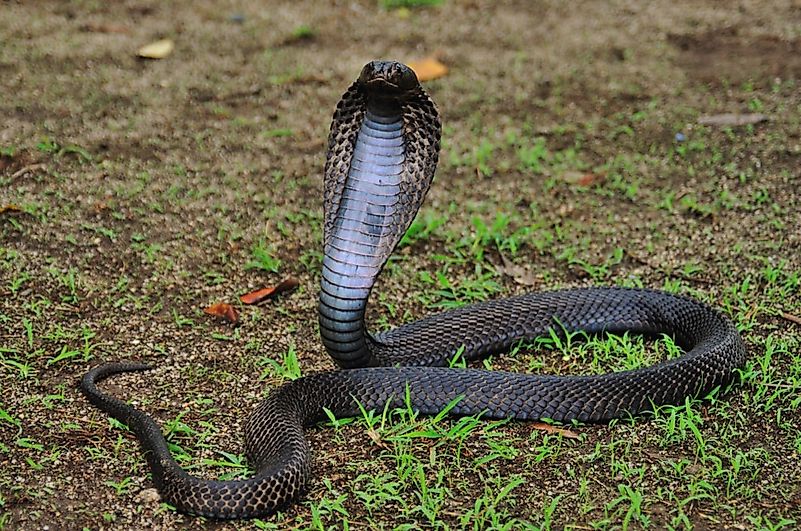
#9 Monocled Cobra (0.47 mg per kg)  The monocled cobra is widespread across Southeast and South Asia. These cobras can adapt to a wide area of habitats. The monocled cobras are terrestrial snakes that feed on small mammals, snakes, amphibians, and other reptiles.
The snakes when threatened get ready to strike to defend themselves. The venom of the monocled cobra is highly poisonous and is a complex mixture of neurotics, cardiologists, and antitoxins.

Cape Cobra (0.37 mg per kg)

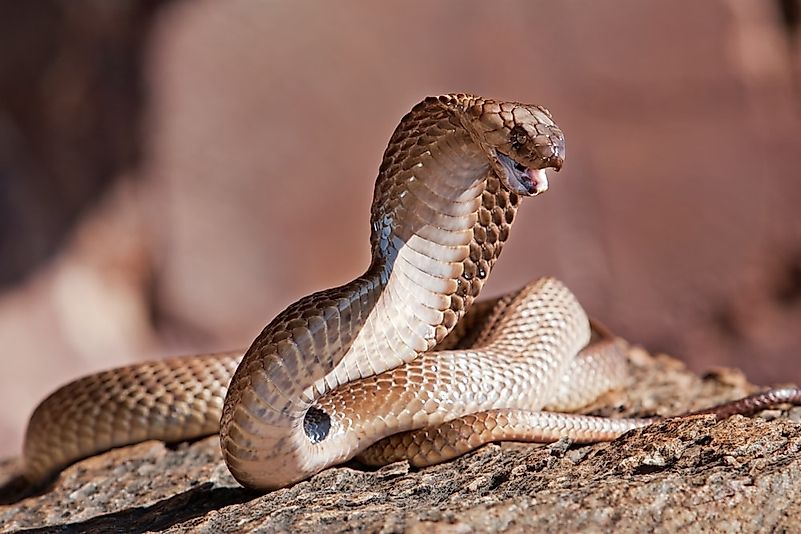
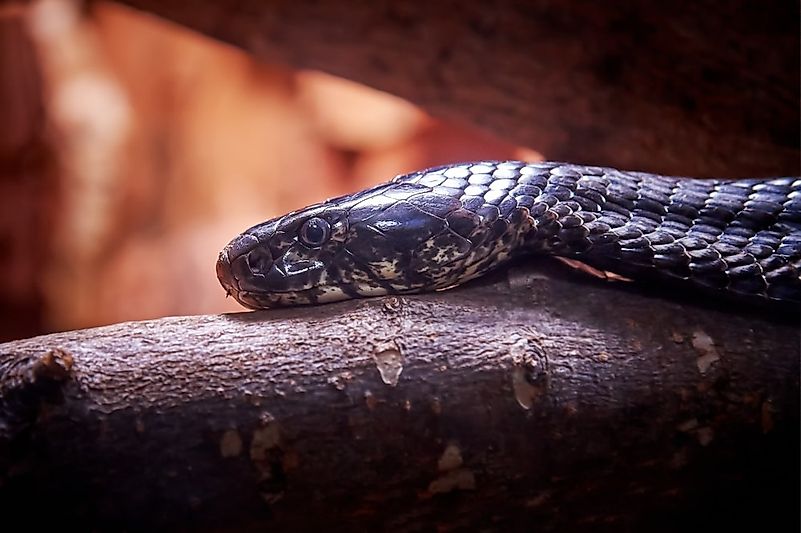
#8 Cape Cobra (0.37 mg per kg)  Cape cobra is a cobra that is endemic to southern Africa where it lives in a wide variety of habitats like savanna, bush veld, desert, and semi-desert areas. The snake has a wide prey base and hunts during the day.
The dangerous venom of the cape cobra coupled with its habit of visiting homes of humans makes it one of Africa’s most feared snakes. The venom has both neurotic and toxicity components, and a powerful bite might result in death if not immediately treated.

Indian Cobra (0.29 mg per kg)

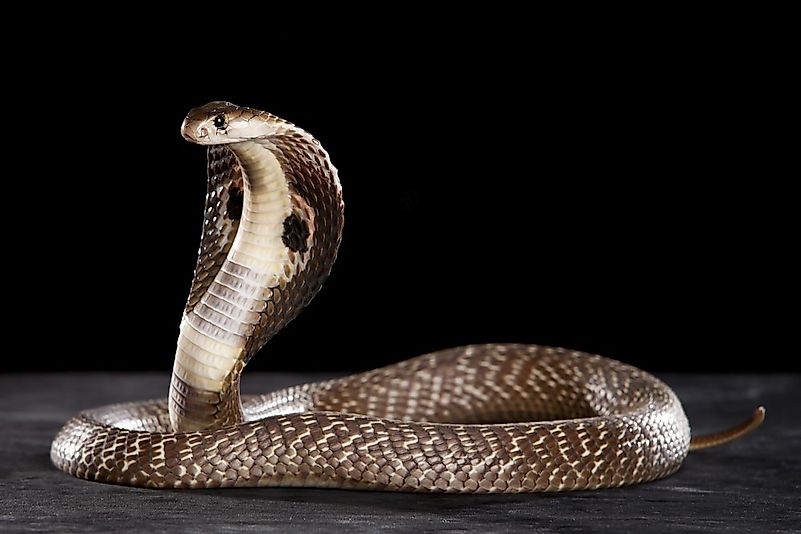
#7 Indian Cobra (0.29 mg per kg)  One of the most venomous snakes living in the Indian subcontinent, the Indian cobra is a member of the “big four” which are the four species of snakes responsible for most snakebites on humans in India. However, the Indian cobra, despite its fierce reputation, is highly revered by Hindus and even worshipped during the Hindu festival of Nag Panoramic. The snake is found in both dense and open forests, rocky terrains, wetlands, crop fields, and even human settlements.
The Indian cobra’s bite delivers a powerful venom that has both neurotic and toxicity components. The venom has the ability to paralyse muscles and trigger death if left untreated.

Chinese Cobra (0.28 mg per kg)

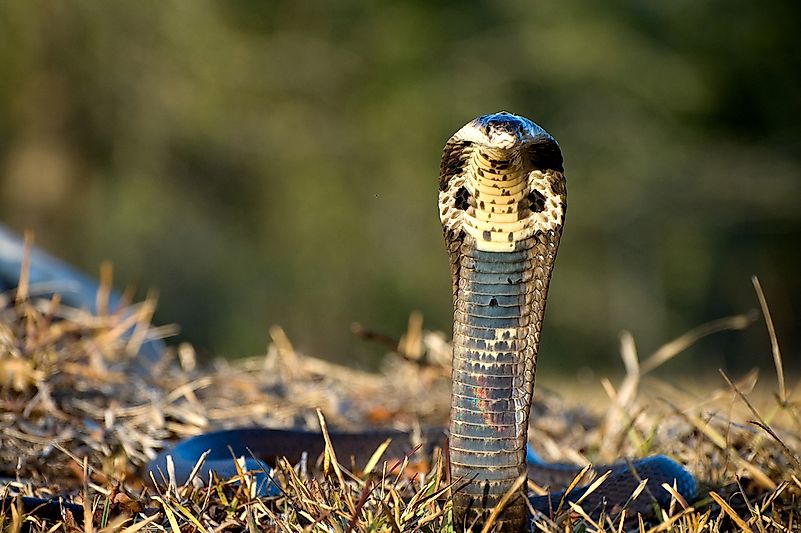
Image result for Chinese Cobra (0.28 mg per kg)The Chinese cobra is a venomous elapsed that lives in southern China. Many snakebite cases related to this snake have been recorded in China and the neighbouring countries. The Chinese cobra inhabits grasslands, mangroves, woodlands, and shrub lands within its range. The species is also found in elevations ranging from lowlands to elevations of up to 6,600 feet. The snake has a wide prey base that includes rodents, amphibians, smaller reptiles, and birds.
The Chinese cobra when confronted, can be highly aggressive and strike if the threat prevails. Neurotics and antitoxins are the main components of the Chinese cobra venom. A powerful bite can inject enough venom to cause death in an adult human.

Indochinese Spitting Cobra (0.25 mg per kg)

#5 Indochinese Spitting Cobra (0.25 mg per kg)  The Indochinese spitting cobra is the fifth most venomous cobra species that is found in Southeast Asia including Laos, Vietnam, Cambodia, and Thailand. The snakes inhabit a wide variety of habitats including woodlands, plains, hills, and lowlands.
The Indochinese spitting cobra exhibits a highly variable behaviour at different times of the day. It is timid during the daytime and will seek immediate shelter when threatened. However, at night, if the snake is threatened, it is most likely for the snake to strike. The snake first spits venom at its victim and if further threatened bites the victim. The venom of this spitting cobra is a potent combination of powerful neurotic and cytosine. Death might occur in adult humans left untreated after the bite due to muscle paralysis and asphyxiation.

Forest Cobra (0.225 mg per kg)

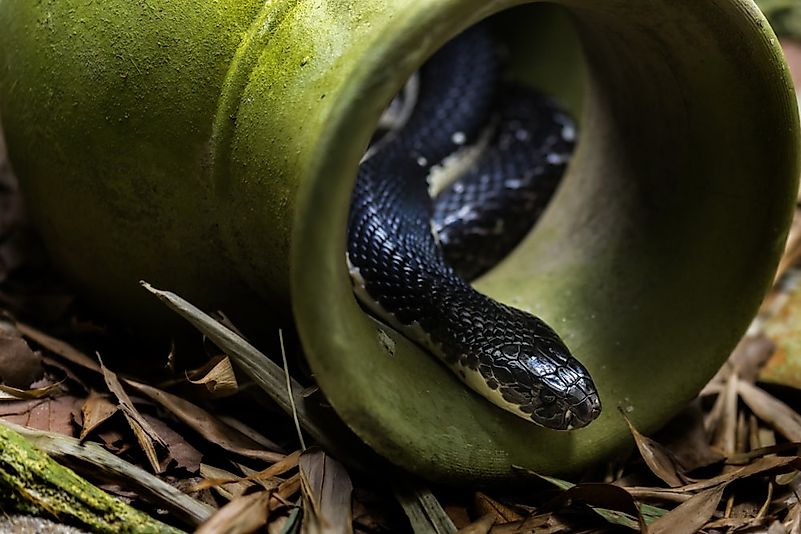
#4 Forest Cobra (0.225 mg per kg)  The forest cobra is an elapsed that lives in Africa, mainly in the western and central parts of the continent. Despite its name, the cobra can inhabit a wide range of environments including moist savanna habitats, lowland forests as well as drier corrections. The diet of the forest cobra is varied and includes insects, small mammals, and reptiles.
The forest cobra is a very dangerous species and is always on high alert and exhibits a nervous behaviour. The forest cobra bite is life threatening in nature due to the potent neurotic nature of the bite. Since the snake injects a significant volume of venom, death by ventilation can occur within 30 to 120 minutes.

Samar Cobra (0.21 mg per kg)

#3 Samar Cobra (0.21 mg per kg)   The Samar cobra is an extremely venomous spitting cobra species that is native to the Mindanao and Visayas island groups of Philippines. The habitat of this species ranges from tropical plains to mountainous jungles. The snake feeds mainly on rodents and less frequently on reptiles and frogs.
The Samar cobra produces a deadly neurotic venom that also has toxicity properties. Venomous bites by this cobra trigger extensive tissue necrosis and death by respiratory failure. The cobra is known for its nervous behaviour and sprays venom at the target when threatened. If venom enters the eye of the cobra’s victim, it could result in permanent blindness if not flushed out in time.

Philippine Cobra (0.14 mg per kg)

#2 Philippine Cobra (0.14 mg per kg)  The Philippine cobra is a highly venomous elapsed that is native to the northern regions of Philippines. The spitting cobra lives in a wide variety of habitats including low-lying plains, grasslands, dense jungles, crop fields, and also human settlements. It prefers to live near water sources and is an excellent swimmer. The Philippine cobra mainly feeds on small rodents and also frogs.
The venom of these snakes is a pure and potent postsynaptic neurotic. It can trigger death by respiratory failure. The snakes can spit their venom at targets up to 9.8 feet away.

Caspian Cobra (0.10 mg per kg)

Image result for Caspian Cobra (0.10 mg per kg)The Caspian cobra is the most venomous species of cobra in the world and occurs in the Transcaucasia region. Its range thus covers the countries of Turkmenistan, Tajikistan, Uzbekistan, Kyrgyzstan, and parts of Iran, Pakistan, Afghanistan, and India. The Caspian cobra inhabits rocky, stony, and semiarid foothills of mountains in its range and lives at elevations of up to 3,000 meters. The cobra is an excellent swimmer and climber. Small mammals, birds, and amphibians are the prey of these venomous elapses.
The Caspian cobra is a highly aggressive species and is infamous for its bad temper. When threatened, the cobra will spread its hood, sway and hiss and strike repeatedly. The Caspian cobra’s venom can trigger severe neurotically, pain, and swelling following a bite. Death ensues if left untreated and the untreated mortality rate is 70 to 75%, the highest among all species of cobras. In Central Asia, the Caspian cobra is responsible for a significant number of snake bite related deaths.